
QuantERA
Digital methods in analog quantum simulation
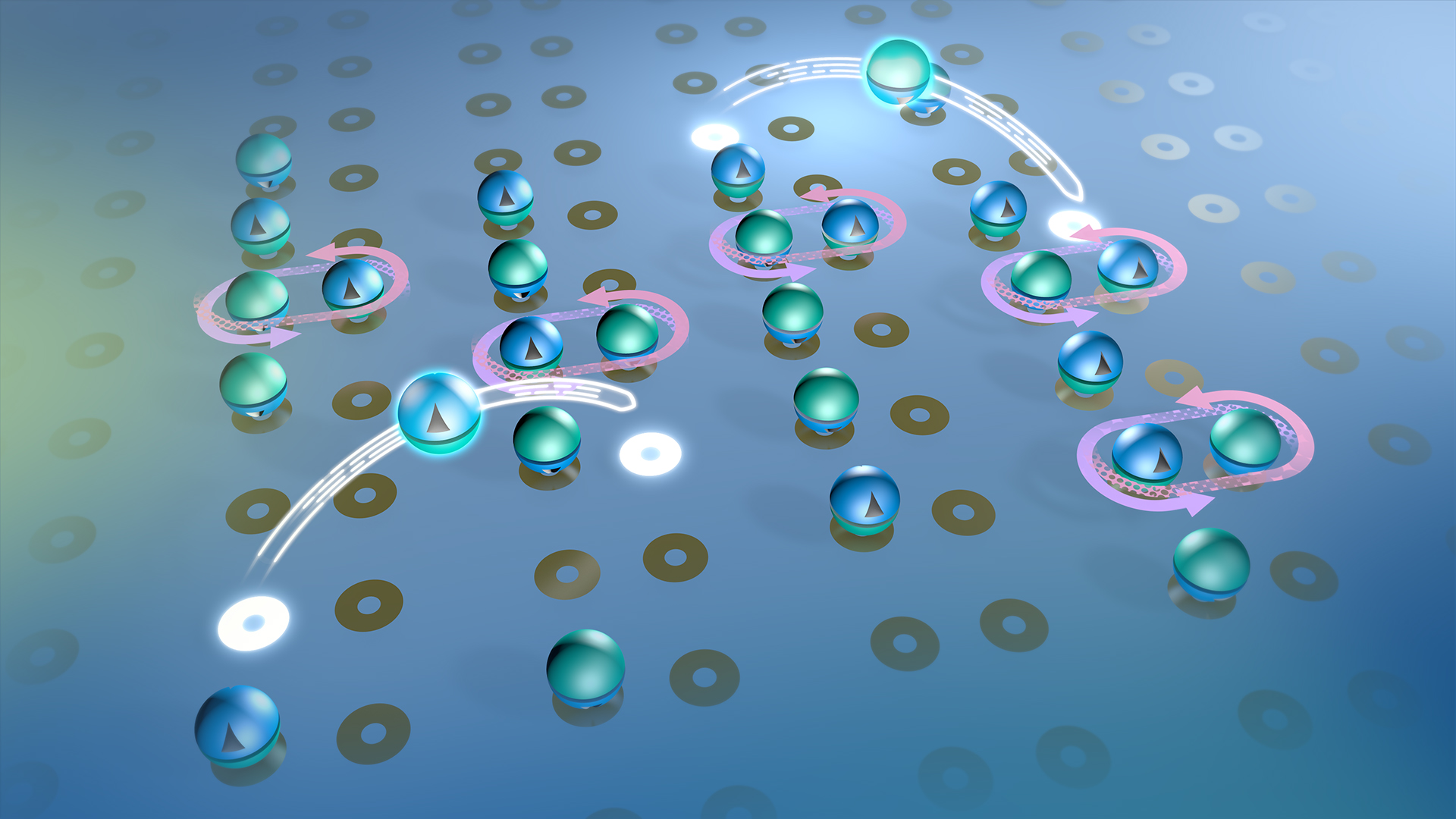
DigiAnaQsim develops a hybrid toolbox for cold-atom quantum simulators: digital control ideas, analog many-body dynamics, and precision readout working together to explore quantum materials.
 Co-funded by the European Union





Project Overview
Making analog quantum simulators more programmable, measurable, and precise.
Quantum materials and molecular systems are governed by strongly correlated particles that can overwhelm classical computation. Analog quantum simulators based on ultracold atoms already access important regimes, but their native models, measurements, and precision remain limited. DigiAnaQsim addresses this gap by importing selected digital quantum-computation techniques into analog cold-atom platforms.
State preparation
Design hybrid analog-digital routes toward low-entropy, ground-state, and finite-temperature many-body states.Precision probing
Adapt advanced measurement and estimation protocols to extract energies, correlations, order parameters, and entanglement.Scientific Approach
A co-designed analog-digital workflow
The consortium links theory and experiment in an iterative loop: algorithms and control concepts are designed for realistic optical lattices, tested numerically, implemented in quantum-gas microscopy platforms, and refined using experimental feedback.
Model targets
Digital controls
Analog dynamics
Precision readout
Theory
Experiment
Consortium
Partner institutions
France
Ecole Normale Superieure
Coordinator and PIAlexander Schuckert
Spain
Instituto de Fisica Teorica UAM-CSIC
PIDaniel Gonzalez-Cuadra
Germany
Max Planck Institute for Quantum Optics
PIPhilipp Preiss
Switzerland
Paul Scherrer Institute
PIAndreas Elben
Germany
Ludwig Maximilian University of Munich
PIMonika Aidelsburger
Outputs
Publications funded by DigiAnaQsim
Coming soon
DigiAnaQsim will follow open-access publication practices where possible and deposit accepted manuscripts in public repositories such as arXiv. Funded publications, datasets, software, and supplementary material will be listed here as the project produces results.
Funding
Supported through QuantERA
Co-funded by the European Union



DigiAnaQsim is a QuantERA-funded transnational research project. The project is co-funded by the European Union and by participating national and regional funding organisations.